American Eagle’s fall campaign, featuring actress Sydney Sweeney and the slogan “Sydney Sweeney has great jeans,” is a bold yet risky attempt to capture a conservative-leaning audience in a polarized consumer landscape. The slogan, a playful double entendre, aims to leverage Sweeney’s appeal to boost brand visibility and sales. However, it has sparked controversy, with critics arguing it objectifies the actress or subtly perpetuates stereotypes. This move highlights the challenges brands face in navigating cultural divides, balancing traditional messaging with modern sensibilities, and avoiding backlash in a hyper-scrutinized social media era. Is American Eagle’s strategy a savvy pivot or a misstep that risks alienating its broader audience? This analysis explores the campaign’s implications, risks, and strategic lessons for brands in a divided market.
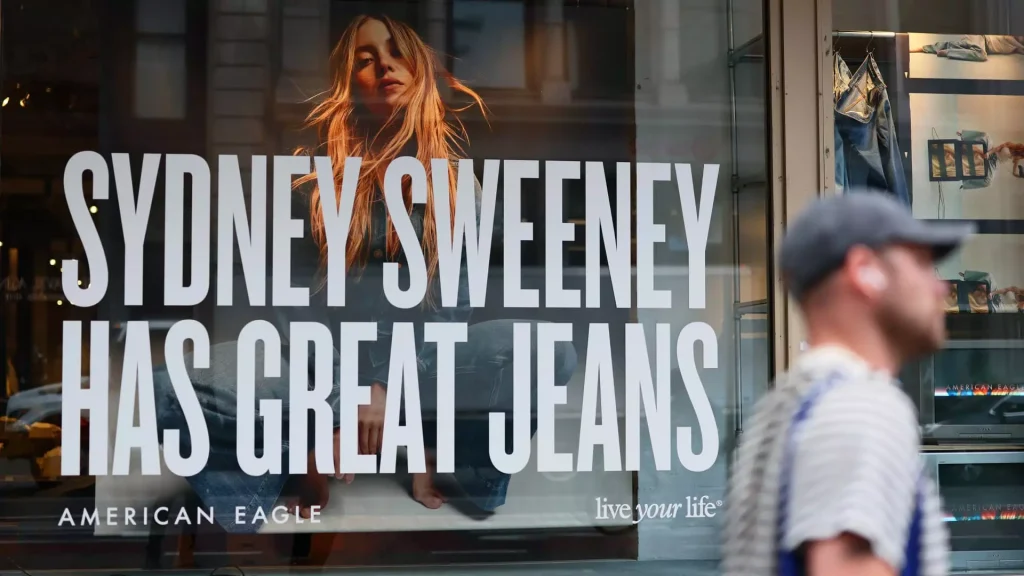
A Calculated Pivot to Conservative Consumers American Eagle’s campaign targets a demographic that feels alienated by “woke” marketing trends, opting for a traditional, relatable approach centered on Sweeney’s star power. The slogan, tying her appeal to the brand’s denim line, aims to resonate with center-right consumers who value straightforward, non-political messaging. This pivot reflects a broader trend: brands are increasingly choosing sides in a polarized society, either embracing progressive narratives or retreating to conservative-friendly territory. American Eagle’s bet is that this audience, underserved by mainstream retailers, will drive sales growth amid declining retail trends. However, the campaign’s reliance on a provocative slogan risks misinterpretation, as some perceive it as a commentary on aesthetics or genetics rather than fashion. This ambiguity underscores the challenge of crafting messaging that appeals to one group without alienating others.
The Perils of Ambiguous Messaging The backlash to the campaign reveals the dangers of ambiguous or provocative marketing in a polarized environment. Critics argue the slogan sexualizes Sweeney or leans into stereotypes, prompting accusations of tone-deafness. American Eagle’s response—insisting the phrase refers only to jeans—has been criticized as evasive, failing to address the underlying concerns. In today’s social media landscape, where missteps are amplified, brands must anticipate diverse interpretations of their messaging. The controversy has generated buzz, contributing to a short-term sales bump, but this fleeting visibility may not translate to sustained growth. Economic headwinds, including declining retail sales and consumer hesitancy, further complicate the picture. American Eagle must move beyond gimmicks to build lasting brand loyalty, emphasizing authenticity and value over temporary attention-grabbing tactics.
Economic Context and Consumer Confidence The campaign’s financial impact must be viewed in the context of broader economic challenges. Retail sales are under pressure from inflation, rising costs, and cautious consumer spending. American Eagle’s reliance on a controversial campaign to boost visibility reflects the industry’s struggle to adapt to these conditions. While the initial social media buzz has driven engagement, sustainable growth requires more than viral moments. Consumers, particularly younger demographics like Gen Z, prioritize quality, affordability, and alignment with their values. American Eagle risks losing this audience if it leans too heavily on polarizing tactics without delivering on product quality or brand authenticity. The company must balance its conservative pivot with broader appeal to maintain relevance in a competitive market.
Strategic Lessons for Brands American Eagle’s campaign offers critical lessons for navigating cultural polarization. First, brands must prioritize authenticity over opportunistic stunts. Aligning with clear, well-understood values—such as quality, inclusivity, or timeless fashion—builds stronger connections than chasing niche segments or political points. Second, companies must anticipate how messaging will be perceived across diverse audiences. Ambiguity, as seen in the “great jeans” slogan, can erode trust if not carefully managed. Third, brands should focus on long-term engagement rather than short-term buzz. Investing in high-quality products, sustainable practices, or digital innovations like personalized shopping experiences can foster loyalty without risking controversy.
Future Implications: Balancing Tradition and Modernity The campaign’s mixed reception highlights the delicate balance brands must strike in a fragmented society. American Eagle’s pivot to conservative consumers taps into a real market opportunity, but it must avoid alienating its broader base, including younger, progressive shoppers. A more prudent approach would emphasize universal values—craftsmanship, affordability, and style—while steering clear of divisive narratives. For example, highlighting denim quality or sustainable production could resonate across demographics without sparking backlash. As consumer preferences evolve, brands that succeed will be those that cultivate credibility and adaptability, bridging cultural divides rather than deepening them.
Conclusion: A Test of Strategic Foresight American Eagle’s fall campaign is a high-stakes gamble in a polarized market. By targeting conservative consumers with a provocative slogan, the brand has sparked both attention and controversy. While the campaign has driven short-term visibility, its long-term success hinges on American Eagle’s ability to deliver authentic value and navigate cultural sensitivities. The broader retail industry faces similar challenges: balancing economic pressures, consumer expectations, and cultural divides. American Eagle must move beyond fleeting stunts to build a brand that resonates with diverse audiences. This campaign is a test of whether the retailer can adapt with foresight or risk reputational and financial setbacks in an unforgiving market.